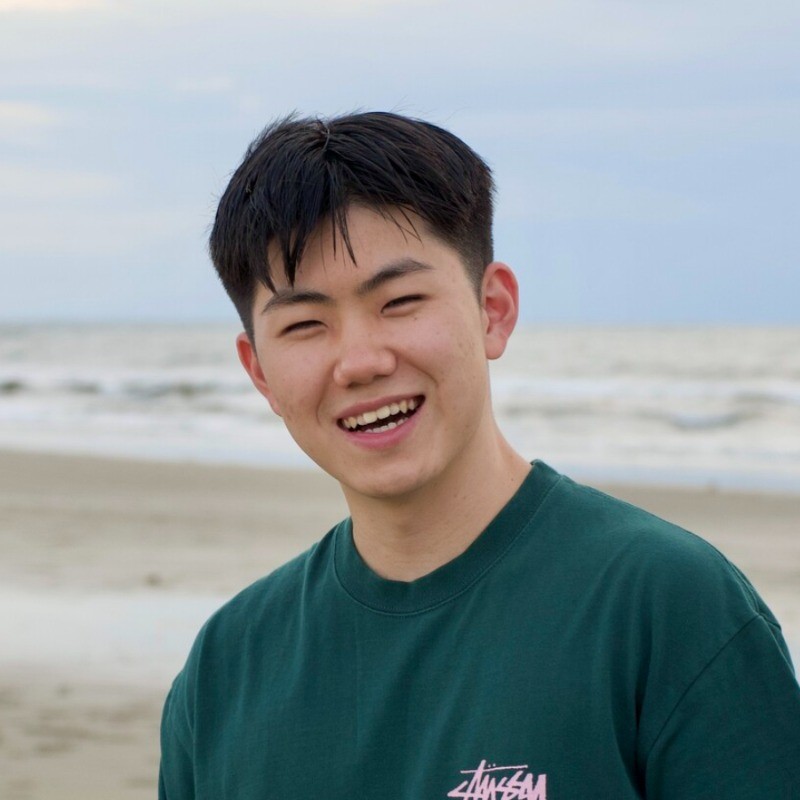
Dooho Lee

Dooho Lee

Co-Founder @ Nums AI

I build foundation models for structured data.

About

I am Co-Founder at Nums AI, where we build foundation models for structured data, including tables, graphs, and time series. I am also an M.S. student in Electrical Engineering at KAIST’s DataAI Lab, advised by Prof. Jaemin Yoo and Prof. Kijung Shin. Previously, I co-founded startups and worked as a software engineer and designer on products spanning LLM-powered workflows, finance, and mobile applications.

Models

Publications

Node4All: Learning Node Representation Beyond Datasets

Dooho Lee and Jaemin Yoo

Node4All learns a reusable graph encoder through self-supervised pretraining on synthetic graphs. Its Channel Graph Transformer handles graphs with different feature dimensions and structures without dataset-specific encoder training or tuning. The same encoder also supports one-shot and in-context learning with an appropriate predictor.

Different graph datasets pass through the same Node4All encoder to produce node representations for downstream predictors.
Figure 1. A shared encoder across graph datasets. Source ↗

View Space: Learning Representation across Arbitrary Graphs

Dooho Lee, Myeong Kong, Minho Jeong, and Jaemin Yoo

View Space introduces a structure-induced representation axis shared across graphs with different feature dimensions and meanings. Graph View Transformation applies a shared mapping along this axis, and Recurrent GVT uses it to learn transferable node representations. An encoder pretrained on OGBN-Arxiv is evaluated on 27 graph benchmarks without retraining the encoder.

Graph View Transformation lifts a node-feature matrix into a node-feature-view tensor and applies a shared mapping along the view dimension.
Figure 2. Graph View Transformation. Source ↗

Generalizing Multi-Scale Time-Series Modeling with a Single Operator

Cheonwoo Lee, Dooho Lee, Doyun Choi, and Jaemin Yoo

SiGMA unifies multi-scale time-series modeling through a learnable scaling operator. Its discrete Gaussian kernel replaces fixed, discrete scales with continuous, distance-aware smoothing, allowing the model to adapt how it aggregates temporal information. The framework is evaluated on both long- and short-term forecasting tasks.

A learnable discrete Gaussian kernel smooths a time series across continuous scales, aggregating information from nearby and distant time steps.
Figure 4. Continuous, distance-aware smoothing with the LDG kernel. Source ↗

A Probabilistic Circuit Framework for Interpretable Graph PU Learning

Sagad Hamid, Dooho Lee, Myeong Kong, Tanya Braun, and Jaemin Yoo

This framework separates node-feature modeling from edge-based refinement to make graph positive-unlabeled learning interpretable. Two probabilistic circuits model node features, and log-likelihood propagation then incorporates graph structure. This separation supports explanations at the graph, node, and feature levels while retaining strong predictive performance.

Two probabilistic circuits produce feature-based log-likelihoods, which are refined through graph propagation to derive pseudo-labels.
Figure 2. Decoupled feature modeling and graph propagation. Source ↗

Aggregation Buffer: Revisiting DropEdge with a New Parameter Block

Dooho Lee, Myeong Kong, Sagad Hamid, Cheonwoo Lee, and Jaemin Yoo

Aggregation Buffer examines why DropEdge alone offers limited robustness improvements in many graph neural networks. It adds a dedicated parameter block that refines aggregation outputs and is trained with edge perturbations while the original model weights stay frozen. The approach improves robustness to structural changes and addresses degree bias and structural disparity.

An Aggregation Buffer is inserted into each trained GNN layer, then trained using DropEdge while the original GNN weights remain frozen.
Figure 3. Integrating and training Aggregation Buffer. Source ↗

Preprints

Distillation of Tabular Foundation Models into Efficient Predictors

Minho Jeong, Dooho Lee, Jinmo Lee, and Jaemin Yoo

NodeGround: A Node Classification Benchmark in the Graph Foundation Model Era

Jinmo Lee, Dooho Lee, Minho Jeong, and Jaemin Yoo

Molecular Property Prediction under Structural Shift with Tabular Foundation Models

Jinmo Lee, Dooho Lee, Minho Jeong, and Jaemin Yoo

Message Passing Does More with Less for In-Context Learning on Graphs

Dooho Lee, Jinmo Lee, Minho Jeong, Kijung Shin, and Jaemin Yoo

TaskBridge: Bridging Unsupervised Tabular Anomaly Detection and In-Context Learning via Virtual Tasks

Doyun Choi, Dooho Lee, and Jaemin Yoo

Work Experience

Nums AI · Co-Founder and CTO

Apr 2026 - Present · Seoul, Republic of Korea

Pensive · Founding Engineer & Designer

Nov 2022 - Aug 2023 · Berkeley, CA

US Army · Korean Augmentation to the United States Army (KATUSA)

Nov 2021 - May 2023 · USAG Humphreys, Republic of Korea

LayUs · Founding Engineer & Designer

Mar 2022 - Jul 2022 · Seoul, Republic of Korea

WARD · Co-Founder, Software Engineer & Designer

Sep 2020 - Oct 2021 · Daejeon, Republic of Korea

Co-Founder and CTO

Nums AI · Apr 2026 - Present · Seoul, Republic of Korea

Co-founded Nums AI to build tabular foundation models for structured data and leads technology strategy and engineering as CTO.

Founding Engineer & Designer

Pensive · Nov 2022 - Aug 2023 · Berkeley, CA

Co-founded a US-based startup with two UC Berkeley students and worked across engineering and product design for LLM-powered workflow tools. Built Pensieve Extension for real-time note taking from Chrome highlights and Pensieve Notes for Zoom transcription and automatic meeting notes, which was used by 3 organizations.

Korean Augmentation to the United States Army (KATUSA)

US Army · Nov 2021 - May 2023 · USAG Humphreys, Republic of Korea

Served as a KATUSA at Bravo Company, 602nd Aviation Support Battalion, 2nd Combat Aviation Brigade, 2nd Infantry Division. Supported communication and coordination between US and Korean personnel while serving as the only KATUSA in the largest company of the unit.

Founding Engineer & Designer

LayUs · Mar 2022 - Jul 2022 · Seoul, Republic of Korea

Built a mobile application for exhibition visitors to upload ticket information and redeem F&B coupons. Contributed to product implementation for a ticket-based redemption workflow connecting cultural events with local customer benefits.

Co-Founder, Software Engineer & Designer

WARD · Sep 2020 - Oct 2021 · Daejeon, Republic of Korea

Co-founded and built a machine learning-based stock information service. The team was selected as one of the top 12 teams in 2021 E*5 KAIST under Blue Point Partners mentorship, launched a private beta with 200+ users, and gathered feedback through fund manager sessions, interviews, and surveys.

Education

B.S. in Electrical Engineering and Computer Science, KAIST

2019 - 2024

Double major. Daejeon, Republic of Korea. Cum laude, GPA: 3.77.

Industrial Projects

Graph-Based Tracking of News Propagation on Social Media Using LLMs Worked on an industrial research project for graph-based tracking of news propagation on social media using LLMs.

Teaching Experience

Teaching Assistant, Introduction to Electronics Design Lab
Teaching Assistant, Seminar<Colloquium>
Teaching Assistant, Programming Structures for Electrical Engineering Developed a data structures programming assignment with auto-grading for 200+ Electrical Engineering majors each semester; assignments/mmr_db.
Teaching Assistant, Foundation of Big Data Analytics

Invited Talks

Professional Service

Selected Awards & Honors

  • Sep 2026 Outstanding Master’s Student Scholarship, KOSAF (₩2.5M/semester)
  • Jun 2024 2024 Team KAIST Global Challenge Program, $15,000 funding
  • Oct 2023 2nd place, 2023 Korea SW Startup Ideathon, ₩1.5M prize
  • Apr 2023 1st place, 8th Army ROKA Support Group Insignia Competition
  • Nov 2022 2nd place, Art Service Follow-up Growth Support Project, ₩20M prize
  • Sep 2021 One of 12 finalists, E*5 KAIST
  • Apr 2021 1st place, Creative Space G A.I & IoT Hackathon, ₩1M prize